AstraZeneca has unveiled details of the expansion of its state-of-the-art manufacturing facility in Coppell, Texas, US. The expansion project will double the production of Lokelma. The investment of $445m follows the groundbreaking at AstraZeneca’s manufacturing facility in Albemarle County, Virginia, US. Both are part of AstraZeneca’s $50bn investment in US R&D and manufacturing over the next five years that was announced in July 2025.
Arkema has officially showcased its Battery Dry Coating Laboratory, located at the Cerdato Research Center in Normandy, France. This state-of-the-art facility complements Arkema’s global network of R&D labs dedicated to the battery industry. The new laboratory is dedicated to exploring and advancing the dry coating process for battery electrodes. By eliminating the need for solvent evaporation, it significantly reduces energy consumption and lowers the carbon footprint of battery production. The laboratory is equipped with two complementary technologies that enable versatile and precise electrode fabrication. The first is direct calendering, which allows for the production of uniform and consistent electrode layers with controlled thickness. The second is electrodeposition, a technique that in addition enables advanced material layering and customisation, and is said to offer greater flexibility in electrode design and performance optimisation.
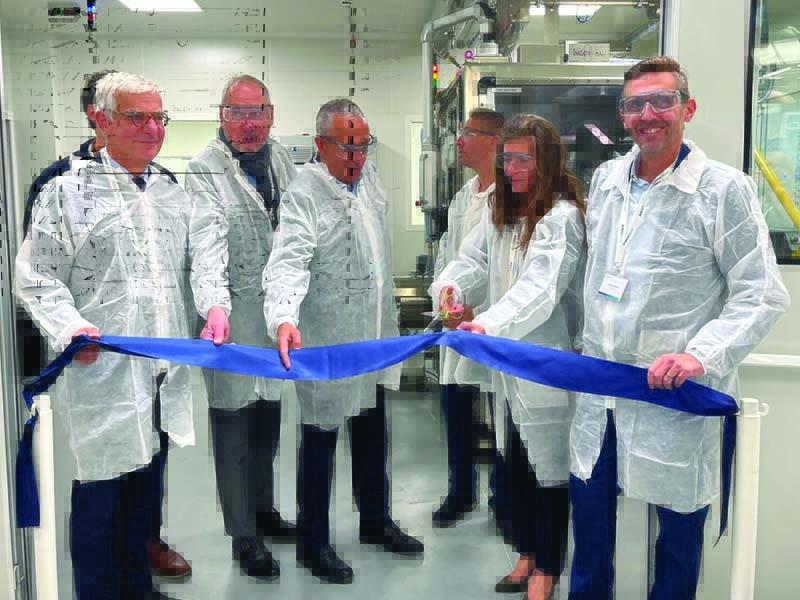
Opening of Arkema’s new Cerdato Dry Battery Coating Laboratory, Normandy, France
Chiesi Group, an international research-oriented biopharmaceutical company, and Arbor Biotechnologies, a next-generation biotechnology company discovering and developing innovative approaches in genetic medicines, have signed an exclusive global collaboration and license agreement for Arbor’s clinical stage program ABO-101 in PH1 together with a multitarget option agreement for the use of Arbor’s advanced gene editing platform technology to develop novel liver targeted therapies for rare diseases. At Chiesi, this programme will be spearheaded by Chiesi Global Rare Diseases, a dedicated business unit focused on R&D and commercialisation of therapies for rare conditions.
The UK BioIndustry Association (BIA) and the Japan Bioindustry Association (JBA) have signed a memorandum of understanding agreeing to work together to connect the two countries’ life sciences and biotech ecosystems to accelerate medical innovation and the commercialisation of engineering biology. The two countries are among the largest and most significant life science and biotech hubs outside of the United States, and the governments of both have prioritised the sector in their respective industrial strategies to drive growth.
Traditional biopharmas are not developing gene therapies for ultra-orphan diseases due to the limited markets and reimbursement challenges associated with one-time treatments for those conditions. To help address this issue, Gemma Biotherapeutics, a US genetic medicines biotech has announced the launch of Rare Therapeutics, a clinical-stage company focused on advancing gene therapies for ultra-orphan diseases, including treatments for lysosomal storage diseases.
Eli Lilly is considering a new greenfield site in Houston, Texas, part of the Generation Park development, for the construction of its proposed API manufacturing facility. The project will comprise multiple buildings and outdoor facilities, installation of machinery and equipment and construction of critical infrastructure representing an investment of approximately $5.9bn. This facility forms part of the broader $27bn US manufacturing investment announced earlier in 2025.
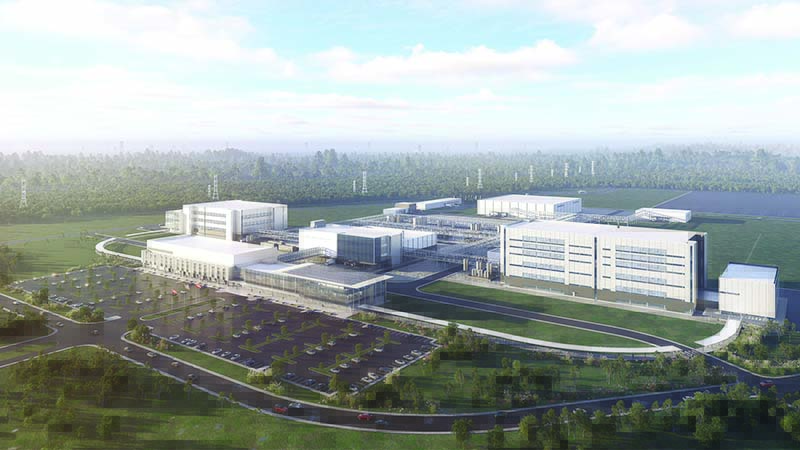
Eli Lilly’s proposed API facility in Generation Park, Texas
Danish pharma Novo Nordisk has entered a definitive $4.7bn agreement to acquire Akero Therapeutics, a US publicly held clinical-stage biotech developing treatments for patients with serious metabolic diseases marked by a high unmet medical need. Akero’s fibroblast growth factor 21 (FGF21) analogue efruxifermin (EFX) is a potential treatment for metabolic dysfunction-associated steatohepatitis (MASH).
LTS LOHMANN Therapie-Systeme, a pharmaceutical technology company that develops and manufactures drug delivery systems, has acquired Renaissance Lakewood, a US-based CDMO specialising in nasal sprays and sterile dosage forms.
European producer of green renewable hydrogen, Lhyfe has inaugurated Germany’s largest commercial bulk production site in Baden-Württemberg. With 10 MW of installed capacity, Lhyfe Schwäbisch Gmünd is the company’s largest such site and its first in Germany. The site was completed at the end of 2024 and is currently undergoing reliability testing and ramp-up, before commercialisation begins in the coming months.
Excellergy, a US biotech developing allergy therapeutics, has launched with a $70m Series A financing to advance its pipeline of allergic Effector Cell Response Inhibitors.
POLYVANTIS, a German provider of semi-finished acrylic and polycarbonate products, has announced the opening of its new Technology Center in Shanghai, China. The new facility brings together cross-functional teams from R&D, commercial and manufacturing to collaborate more closely and respond faster to evolving market demands. It will serve as a centre of excellence for optical and electrical films, supporting fast-growing markets such as electronics, displays and transportation.
BenchSci, a Canadian provider of AI solutions for preclinical research and drug discovery, has signed a three-year agreement with French pharmaceutical and healthcare company Sanofi to deploy and use BenchSci’s ASCEND platform across Sanofi’s global preclinical research organisation. ASCEND aims to significantly accelerate drug discovery efforts, enhance research efficiency and drive innovation through the integration of cutting-edge AI and machine learning.
Indian pharma Lupin has revealed its plans for a new pharmaceutical manufacturing plant in Coral Springs, Florida, US. The projected cumulative investment of $250m, including R&D, infrastructure and capital expenditures over a five-year period, will yield a site that will have the capacity to produce more than 25 respiratory medicines, including albuterol inhalers for children with asthma.
OXB, a UK cell and gene therapy CDMO, has signed and closed an asset purchase transaction to acquire a custom-built, state-of-the-art cell and gene therapy viral vector manufacturing facility in North Carolina, US, from RTP Operating, a subsidiary of US biomanufacturing CDMO National Resilience.
South Korean chemical company Songwon Industrial, a manufacturer of polymer stabilisers, plans to establish a state-of-the-art One Pack Systems production facility in Saudi Arabia. Due for completion in 2028, the new facility will produce a range of high-performance additive blends to support efficient polyolefin resin production serving markets across the Middle East.
UK-based Ignota Labs, which specialises in advanced AI and machine learning solutions to drug development challenges, has acquired all the clinical-stage assets of Kronos Bio after the US biopharma ceased operations earlier in 2025. These are istisociclib a CDK9 inhibitor and entospletinib and lanraplenib, SYK inhibitors. Kronos had a valuation of $3.5bn at its height, however, it failed to progress its assets past Phase 2 trials.
$4,500m
UK BioPharma AstraZeneca has announced it will increase planned investment in its new manufacturing facility in Virginia, US by $500m to $4.5bn. This will help support the manufacturing of a broader range of medicines, including cancer treatments. The new facility is expected to create approximately 3,600 direct and indirect jobs.
10m
German science and technology company Merck KGaA has announced that EMD Serono, the healthcare business of Merck in the US and Canada, and the US Government have entered into an agreement to expand access to EMD Serono’s IVF therapies for the more than 10m American women struggling to have a baby. EMD Serono will offer direct-to-consumer sales of its IVF therapies to eligible patients with prescriptions at significantly reduced prices.
94%
Belgian-French chemical company Solvay, operating as Rhodia in Brazil, and Veolia, a French company that provides management solutions for water, waste and energy, have announced a water resilience project. Solvay’s Santo André industrial plant, which produces polymers for the textile and engineering plastics industries, now recycles 94% its water. Veolia integrated its membrane technology into the plant, creating a closed-loop system that converts effluent into high-quality water for industrial processes.
15
US pharma Eli Lilly has opened its newest Lilly Gateway Labs site in San Diego, California, US, expanding its network of shared innovation hubs designed to support early stage biotechs by providing lab space and opportunities to collaborate with Lilly scientists. The new facility features 7700m2 of flexibly designed laboratory and office space to accommodate up to 15 life science ventures.
US pharma AbbVie has announced the start of construction of a $70m expansion at its AbbVie Bioresearch Center in Worcester, Massachusetts, US, which serves as a centre of excellence for biologics R&D and manufacturing. This expansion is part of the company’s commitment to invest more than $10bn of capital in the US to support innovation and expand critical biologics manufacturing capabilities and capacity.
US biotech Halozyme Therapeutics, which develops oncology therapies designed to target the tumour microenvironment, has entered into a definitive agreement to acquire Elektrofi, a US biopharma with an ultra-high concentration microparticle technology for biologics, branded Hypercon. The transaction, which is made up of an upfront payment of $750m and up to three $50m milestone payments, is contingent on three separate product regulatory approvals. Hypercon enables biologic product formulation concentrations of 400-500 mg/ml, which can be up to 4 to 5 times higher than standard aqueous solution formulations for current biologics. The increased concentration reduces the volume of injection for the same dosage and will create more opportunities for at-home and healthcare professional office delivery.
Kurita America, a US water treatment solutions company, and Cyclopure, a US developer of advanced adsorbent technologies, have formed a partnership to deliver a sustainable solution for removing per- and polyfluoroalkyl substances (PFAS) from water with a completely regenerable material. Under the partnership, Kurita will supply filtration equipment design and fabrication, while Cyclopure will supply its DEXSORB adsorbent, which delivers a 4 to 10x higher capacity, compared with current treatment methods, such as activated carbon and ion exchange.
US holding company Berkshire Hathaway has announced a definitive agreement to acquire OxyChem, the wholly owned chemical business subsidiary of US energy company Occidental, in an all-cash transaction of $9.7bn. OxyChem is a manufacturer of commodity chemicals, including PVC resins, chlorine and sodium hydroxide (caustic soda) used in plastics, pharmaceutical and water treatment chemicals.
Dutch-Swiss nutrition, health and beauty products company DSM-Firmenich, has inaugurated its Van Marken Food Innovation Center in Delft, the Netherlands. The new centre houses the headquarters of DSM-Firmenich’s Taste, Texture & Health business unit, as well as a co-creation kitchen and multiple tasting facilities. The advanced cheese, bakery and brewery facilities are equipped with the latest technologies to develop sugar substitutes, lactose-free products and sustainable plant-based alternatives to fish, meat and dairy.
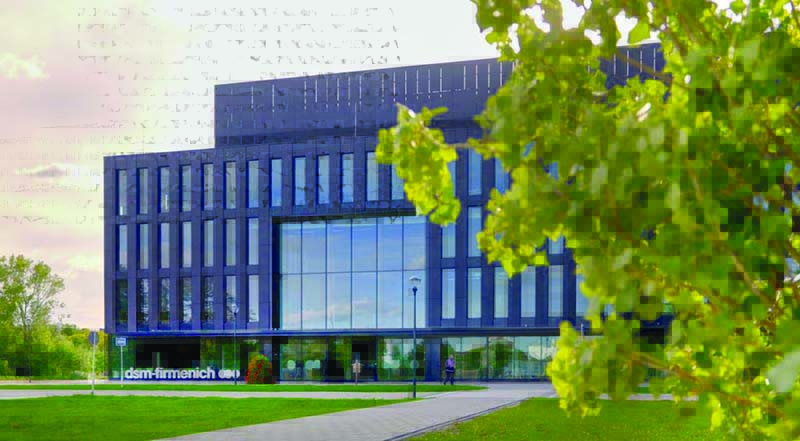
New DSM Firmenich Food Innovation lab in Delft, The Netherlands
Givaudan, a Swiss manufacturer of flavours, fragrances and active cosmetic ingredients, has broken ground for its new facility in Guangzhou, China. The new site, of around 30,000m2, will include a creative centre housing evaluation, marketing, sales and application teams, along with creative perfumers and perfumery analysts. The facility will also include a highly automated production site to support the fast-moving expansion of Givaudan’s fragrance business in China.
Tres Alchemix, a UK early-stage biotech applying AI to drug discovery, has closed a $4.4m Series A financing round led by US early-stage venture capital firm DNX Ventures, with participation from existing Japanese investor Waseda University Ventures. The funding will accelerate development of Tres Alchemix’s predictive AI platform, the design of novel drugs through direct prediction of therapeutic and potential adverse effects and support the opening of a new laboratory at The Oxford Science Park in the UK.
VectorY Therapeutics, a Dutch biotech developing vectorised antibody therapies for the treatment of neurodegenerative diseases, and Shape Therapeutics, a US biotech harnessing AI and RNA technologies to engineer genetic medicines, have entered into an option and license agreement. The agreement grants VectorY an exclusive option to evaluate Shape’s deep-brain penetrating adeno-associated virus capsid, SHP-DB1, for vectorised antibody payloads against three therapeutic targets. Upon successful evaluation, VectorY may obtain an exclusive license to SHP-DB1 for delivery of vectorised antibodies against these targets. Shape will receive an upfront payment and the potential to receive up to $1.2bn in total fees and milestone payments.
Toyoda Gosei Co, a Japanese manufacturer of rubber, plastic and urethane products, has invested in Japanese start-up EF Polymer KK, which is developing super-absorbent polymers made using orange and banana peels (inedible agricultural waste). By mixing these polymers into soil to raise the soil’s water retention characteristics, the amount of water used in growing crops can be greatly reduced, supporting sustainable agriculture.
German chemical company BASF has revealed a pilot project for recycling automotive shredder residue (ASR) – a mix of materials that remain after the removal of metals and glass. The pilot process extracts polyamides from ASR in a largely pure form using sorting and processing technology. The polyamide fraction obtained in this way is used as the starting material for a new solvent-based recycling process where the polymer chain is not split but selectively dissolved with the aid of a suitable solvent, then purified and finally reprocessed into PA6 compounds, also known as Nylon 6, a strong and tough engineering thermoplastic.
Turbine, a Hungarian company specialising in virtualising biological experiments with AI, has formed a collaboration with UK biopharma AstraZeneca to test the ability of Turbine’s platform to rationalise antibody-drug conjugate (ADC) discovery by predicting response mechanisms, informing ADC positioning and reducing the need for large-scale cell line screens. This collaboration will apply Turbine’s platform to not only improve the efficiency and speed of ADC discovery but also deliver mechanistic insights that current experimental screening approaches may lack.
Thermo Fisher Scientific, a US supplier of analytical instruments, and laboratory, pharmaceutical and biotechnology services, has launched Clinical Trial Carbon Calculator, a tool designed to help biopharmaceutical companies and research sponsors estimate, understand and reduce the environmental footprint of their clinical trials. The Calculator is open access and provides an evidence-based framework for assessing emissions across every phase of a study.
Stahl, a global leader in speciality coatings for flexible materials, has reopened its advanced coatings facility in Ranipet, India. Originally inaugurated in April 2000, the facility remained operational until its closure in 2019. Following Stahl’s recent announcement of the divestment of its wet-end activities, it has reopened the site focused on leather finishing, performance coatings, and packaging coatings. The upgraded facility brings together coatings formulations production, R&D, application lab and testing capabilities under one roof.
UK-based Touchlight, a pioneer in DNA manufacturing technologies, has been named the 2025 FOYA Category Winner for Innovation in the International Society for Pharmaceutical Engineering (ISPE) Facility of the Year Awards (FOYA) in Charlotte, North Carolina. The company’s Morelands facility, located in a former Victorian waterworks in Hampton, London, has been transformed into a world-class production hub for its enzymatic DNA technologies for advanced therapies. Touchlight’s technology is said to address key and long-standing challenges associated with traditional plasmid DNA (pDNA) manufacturing, by eliminating fermentation processes and antibiotic resistance sequences while achieving greater purity and sequence flexibility. The facility’s expansion has tripled its production capacity, making it the largest cell free DNA manufacturing site globally.
In the US, BioCryst Pharmaceuticals and Astria Therapeutics have entered into a definitive agreement under which BioCryst will acquire Astria, a biopharmaceutical company focused on developing therapies for allergic and immunologic diseases, for approximately $700m in enterprise value. Astria’s lead product candidate navenibart is an injectable, long-acting, monoclonal antibody inhibitor of plasma kallikrein for hereditary angioedema (HAE) prophylaxis.
Takeda has entered an agreement with AI drug designer Nabla Bio, a Harvard spinout, which will receive an upfront payment in the double-digit millions, with the chance to net more than $1bn in milestone payments. The new project will use Nabla’s Joint Atomic Model across Takeda’s early-stage programs to generate new antibodies, multispecifics and other therapeutics for multiple targets at once.
Merck KGaA, the German science and technology company, has signed a definitive agreement to acquire the chromatography business of JSR Life Sciences, a leader in contract development and manufacturing, preclinical and translational clinical research and bioprocessing solutions. The acquisition will expand Merck’s downstream processing portfolio with advanced Protein A chromatography capabilities, supporting efficient and scalable production of biopharmaceutical therapies, including monoclonal antibodies.
 Visit Blog