BY ANTHONY KING
US researchers have created a new high-energy compound suitable for rocket fuel. The boron-containing compound could make return flights from Mars possible, says the group at the University of Albany, New York.
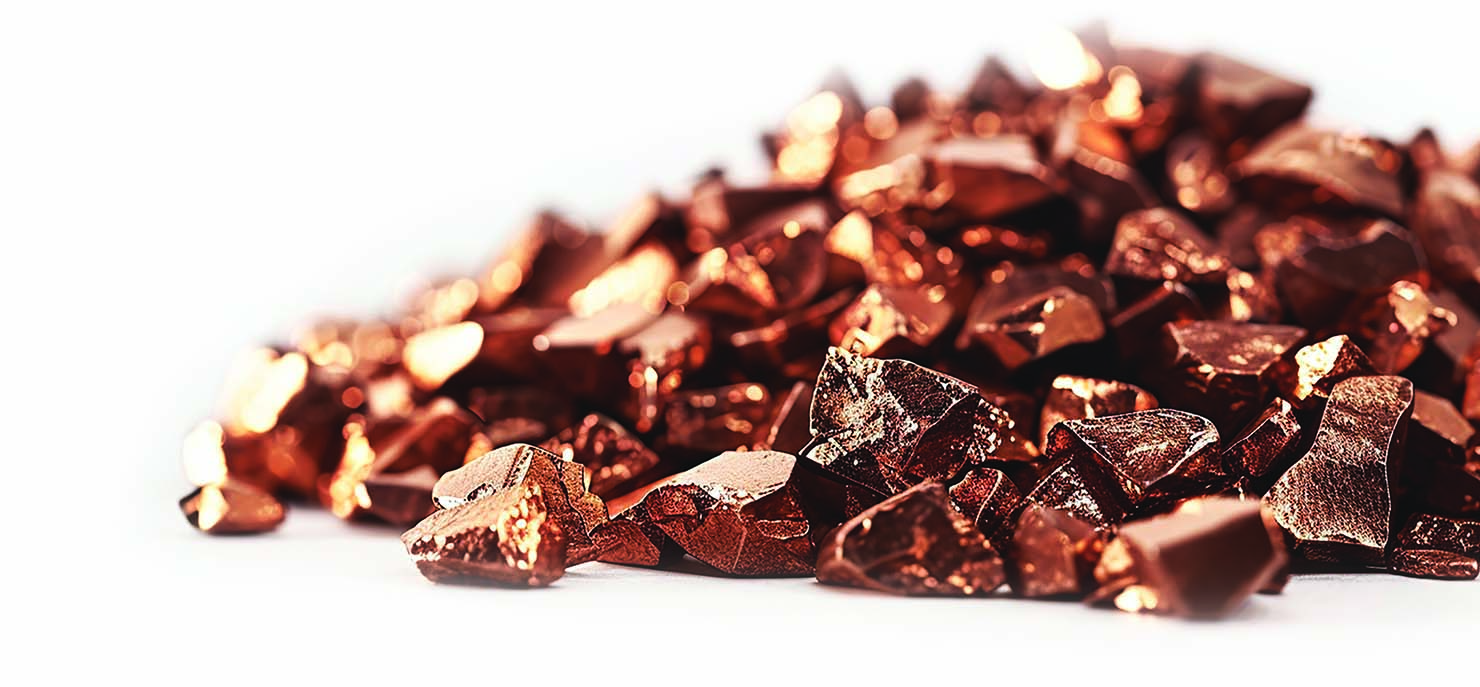
Their manganese diboride (MnB2) boasts around 20% more energy by weight and 150% more by volume than the aluminium used in today’s solid rocket boosters (JACS, 2025, DOI: 10.1021/jacs.5c04066). In theory, this makes them superior for ramjets, scramjets and rocket propulsion, where maximising energy per unit volume is crucial.
‘The small volume and high energy per weight of our manganese diboride makes it ideal for a return rocket from Mars,’ says chemist Michael Yeung at Albany, who led the research. Boron’s ability to form stable bonds with oxygen during combustion releases substantial energy, but boron compounds pose difficulties too.
‘They are challenging to work with because of incomplete combustion,’ says Boniface Fokwa, a materials scientist at University of California, Riverside, US. Boron particles tend to form a viscous, liquid boron oxide (B2O3) layer on their surface during ignition, which acts as a barrier to oxygen. This is made worse by the oxide’s high melting and boiling points, which slow ignition and trigger agglomeration of particles, reducing burn rates, Fokwa explains.
The Albany group achieved the first successful synthesis of phase-pure MnB2 by heating it rapidly to 3,000°C in under ten seconds in an arc-melter, and then cooling it down to room temperature within ten seconds. This creates a layered structure with boron slices intercalated with manganese in-between.
This synthesis approach overcame MnB2’s metastability and headed off manganese evaporation and the competing formation of manganese monoboride (MnB) and MnB4, which usually form under high-temperature arc-melting and lead to impurities.
‘The most stable conformation for the diborides would be a chair conformation, but we cool it so fast that we get a planar conformation,’ says Yeung. ‘That’s a very uncomfortable position and that’s where the metastability comes in,’ almost like a stretched spring waiting for release. The way the boron surrounds the metal also gives an excess of d-electrons, contributing to the metastability.
Despite being highly energetic, the MnB2 powder will not combust until it meets an ignition agent like kerosene. ‘What’s especially new and interesting is the demonstration of MnB2’s combustion properties: it exhibits a remarkably low ignition temperature of ~650°C (compared with over 1400°C for pure boron), rapid burn rates, and complete combustion efficiency approaching 100%,’ comments Fokwa.
MnB2 is over 148% higher in volumetric heat of combustion than solid-state fuel of aluminium metal, he adds. This was used in the US NASA Space Shuttle’s solid rocket boosters and is expected to be used in future space launch systems. ‘This is, to date, the highest volumetric heat of combustion of any known solid-state fuel discovered,’ says Fokwa. Nevertheless, it is not without potential downsides. ‘Its combustion produces manganese oxide – MnO, MnO2 – particulates, which could contribute to engine nozzle erosion or deposit buildup over repeated cycles, potentially reducing hardware lifespan,’ Fokwa notes.
‘This fuel should be of interest to any space-faring organisations thinking about return rockets, which must be as small and lightweight as possible,’ says Yeung. The Albany group is now working on a paper that will explain in greater detail where the meta-stability originates.
 Visit Blog